Travel to India at a Glance
These are the essentials for UK travellers, checked against GOV.UK and recent sources as of 31 October 2026.
| Topic | What to know |
|---|---|
| Visa | An e-Visa is needed. There is no visa on arrival for British citizens |
| Passport | Valid for at least six months after arrival, with two blank pages |
| Arrival form | Free e-Arrival Card, completed within 72 hours before you land |
| Non-stop flights | London to Delhi and Mumbai, about 8 hours 40 minutes to 9 hours 45 minutes |
| Best time to go | October to March for most regions |
| Monsoon | Roughly June to September |
| Currency | Indian rupee (₹) |
| Time zone | 5 hours 30 minutes ahead of the UK in winter and 4 hours 30 minutes ahead in summer |
| Electricity | 230 volts, 50 Hz, with Type C and D sockets, so UK travellers need an adapter |
| Areas to avoid | The India-Pakistan border area, most of Jammu and Kashmir, and Manipur, according to the FCDO |
| Typical daily budget | Roughly £15 to £35 on a budget and £40 to £80 mid-range, before flights |
Visa and Entry Requirements to Travel to India from the UK
British citizens need a visa before they fly, and the quickest route for most holidays is the online e-Tourist Visa. Follow these steps in order.
- 1
Check your passport.
It should be valid for at least six months after your arrival date and have two blank pages. Renew it first if it falls short, or the airline may refuse boarding.
- 2
Choose your e-Tourist Visa.
There are three options: a 30-day visa with double entry, a one-year multiple-entry visa and a five-year multiple-entry visa. The longer visas limit how long you can stay per visit and per calendar year, so read the conditions on your approval.
- 3
Apply on the official portal.
Use the Government of India e-Visa site, indianvisaonline.gov.in/evisa. You will upload a passport scan and a photograph, and pay the fee online. Unofficial agents may add service charges.
- 4
Apply early.
The fee must be paid at least four days before you arrive, or the application will not be processed. A 30-day visa can be requested up to 30 days ahead, and the longer visas up to 120 days ahead. Approval often takes three to five working days, so allow one to two weeks.
- 5
Print your approval.
Carry the electronic travel authorisation, and check that you land at an airport or seaport that the e-Visa allows.
- 6
Complete the e-Arrival Card.
This free online form is separate from your visa and must be filled in within 72 hours before you arrive.
Other Entry Points to Remember
Rules can change at short notice, so read the latest GOV.UK entry requirements for India in the week you travel. Not sure which ticket fits your visa dates? Ask our travel experts before you pay.
When Is the Best Time to Travel to India?
India is so large that the best month depends on where you are going. As a rule, the cool, dry months from October to March suit most travellers, while the summer monsoon runs from roughly June to September.
| Region | Best months | What to expect |
|---|---|---|
| Delhi, Agra, Jaipur and Rajasthan | October to March | Warm days and cool nights. Temperatures often reach 40°C in April and May |
| Goa | November to March | Dry and sunny. Heavy rain from late May to September |
| Kerala and the south | October to April | Warm and humid, with the backwaters at their best from late November to March |
| Himalayan foothills | October, November, March and April | Clear views in the shoulder months, and snow in midwinter |
| Eastern Himalaya, such as Darjeeling | Avoid June to August | Heavy monsoon rain |
Seasonal Points to Plan Around
Where to Go When You Travel to India
Distances are huge, so choose one or two regions rather than trying to see everything. Each area below has its own character, season and pace.
Route Ideas for a First Visit
| Route | Suggested time | Best for |
|---|---|---|
| Delhi, Agra and Jaipur | 5 to 7 days | A first look at India's history and architecture |
| Rajasthan circuit | 10 to 14 days | Forts, palaces, desert and markets |
| Kerala and Goa | 8 to 10 days | Backwaters, beaches and a slower pace |
| Delhi, Varanasi and Agra | 7 to 9 days | Culture, spirituality and the Taj Mahal |
| Mumbai and Goa | 7 to 9 days | City life followed by the coast |
A 30-day e-Visa is enough for most of these trips. If you want a longer journey, compare the one-year and five-year options.
Practical Notes for Sightseeing
Getting There and Getting Around When You Travel to India
Flying from the UK
India is well served by non-stop flights from London. British Airways flies from Heathrow and Gatwick to Delhi, Mumbai, Bengaluru, Chennai and Hyderabad. Virgin Atlantic flies from Heathrow to Delhi and Mumbai, with Bengaluru as an additional route in the summer schedule, and Air India and IndiGo also operate non-stop to Delhi.
| Route from London | Typical non-stop time |
|---|---|
| Delhi | About 8 hours 40 minutes to 9 hours 30 minutes |
| Mumbai | About 9 hours |
| Bengaluru and Hyderabad | About 9 hours 50 minutes |
| Chennai | About 10 hours 55 minutes |
Times vary by airline, because some routings are longer than others, so check the scheduled journey time before you buy. If your destination has no non-stop service, such as Kochi, one-stop options through the Gulf and other hubs are widely available. Passengers from Manchester, Birmingham and Edinburgh usually connect via London or a hub. Our team can compare these for you, so contact our travel experts with your dates.
Getting Around India
| Transport | Best for | Watch out for |
|---|---|---|
| Domestic flights | Long distances, such as Delhi to Kerala or Goa | Winter fog in the north can cause delays |
| Trains | Scenic, affordable journeys between major cities | Popular services sell out, so book well ahead through the official rail booking site |
| Private car and driver | Rajasthan and the Golden Triangle, with flexible stops | Agree the route and price before you set off |
| Ride-hailing apps and taxis | Cities and airport transfers | Use the app fare, or agree a price first |
| Metro and local trains | Delhi and Mumbai | Avoid rush hour with luggage |
| Auto-rickshaws | Short local trips | Insist on the meter or agree the fare in advance |
Build In a Buffer
Delays are common, especially in winter fog and the monsoon. Leave a spare day before your flight home, and allow extra time to reach airports in large cities, where traffic can be heavy.
How Much Does It Cost to Travel to India?
Once you land, India is one of the best-value destinations in the world. Flights and any private tours are usually your biggest costs.
Budget
Typical daily spend per person
About £15 to £35
Hostel dorms or simple guesthouses, local food, trains and buses
Mid-range
Typical daily spend per person
About £40 to £80
Air-conditioned hotel rooms, restaurant meals, a driver for some days
Luxury
Typical daily spend per person
£100 or more
Heritage hotels, private cars, guided experiences
These are estimates from 2026 traveller cost surveys, and prices vary by city and season. They exclude flights, visa fees and insurance. Delhi, Mumbai and the Rajasthan palace cities cost more than smaller towns.
Typical Prices
How to Save Money
Money Tips for Travellers
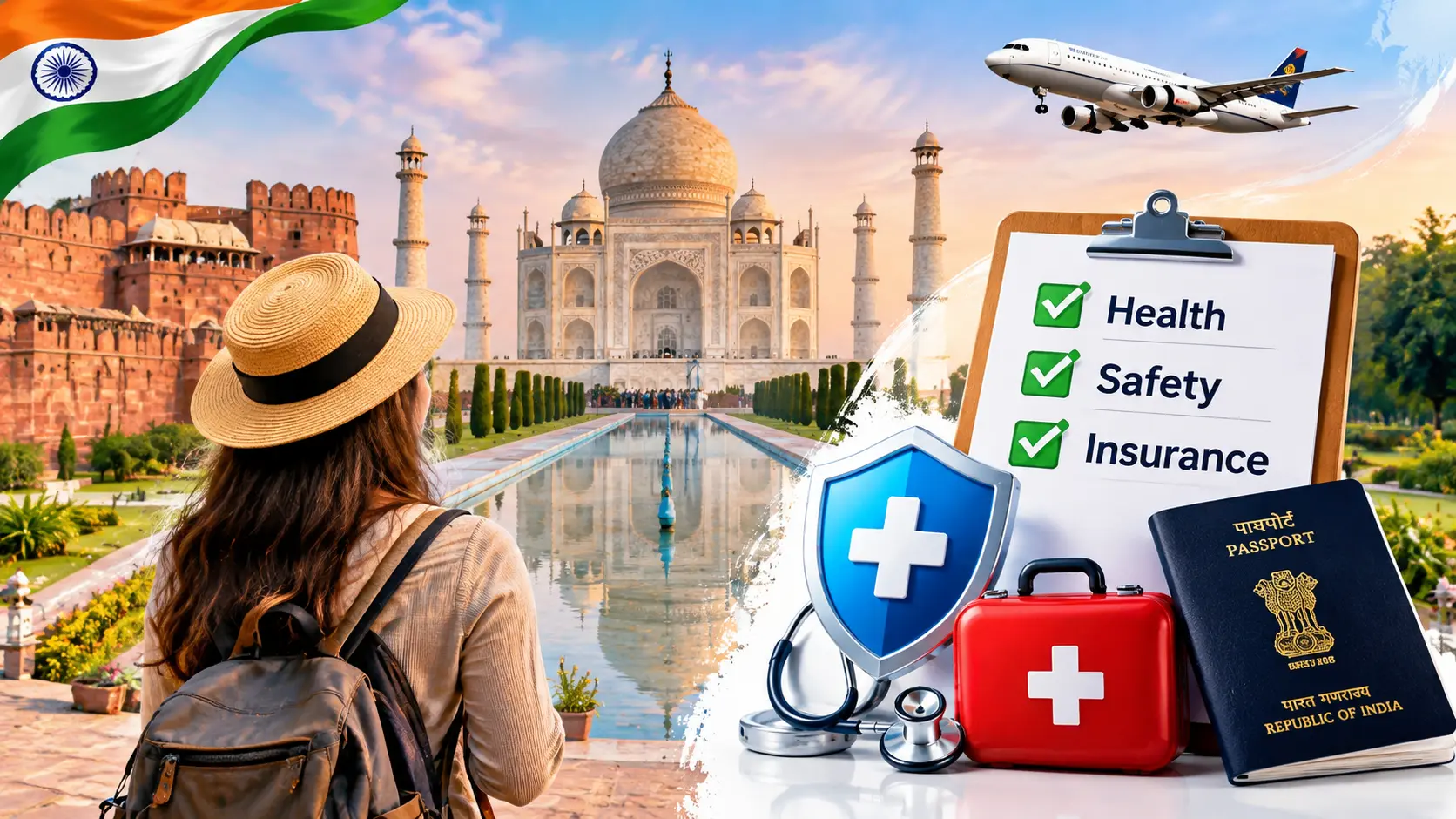
Is It Safe to Travel to India? Health, Safety and Insurance
Millions of visitors travel to India every year without serious problems. The main tourist routes are well established, but a few regions carry official warnings, and some health and safety risks need planning.
Safety and Areas to Avoid
The UK Foreign, Commonwealth and Development Office (FCDO) advises against:
- All travel within 10km of the India-Pakistan border.
- All travel to the Union Territory of Jammu and Kashmir, including Pahalgam, Gulmarg, Sonamarg and Srinagar, with limited exceptions listed on GOV.UK, such as travel by air to and from the city of Jammu.
- All but essential travel to Manipur, including the capital, Imphal.
The advice changes, so read the latest FCDO travel advice for India before you book and again before you fly. Popular routes such as Delhi, Agra, Jaipur, Mumbai, Goa and Kerala are outside these warnings.
Staying Safe on the Ground
Health and Vaccinations
Travel Insurance
Insurance is essential. Your policy may be invalid if you travel against FCDO advice, and a UK GHIC does not cover India. Look for cover that includes:
If plans change suddenly, our emergency travel package can help with short-notice flights.
Practical Tips for Travel to India
Phones, Data and Power
Language and Local Etiquette
Hindi and English are widely spoken, and communication is easy in most tourist areas. A few habits show respect and help you blend in:
What to Pack
Our international travel packing checklist covers documents, carry-on essentials and common mistakes, and you will find more trip-planning advice on the Travel Campus UK blog.
FAQs
Yes. British citizens need a visa before they fly, and there is no visa on arrival. Most holidaymakers apply online for an e-Tourist Visa on the official government portal, at least four days before arrival. Check GOV.UK for the latest rules.
It is a free online form that is separate from your visa. You must complete it within 72 hours before you arrive in India. Keep the confirmation on your phone, and check the official guidance before you fly.
Non-stop flights from London to Delhi take about 8 hours 40 minutes to 9 hours 30 minutes, and London to Mumbai takes about 9 hours. Bengaluru and Hyderabad take around 9 hours 50 minutes, and Chennai about 10 hours 55 minutes.
Most visitors travel safely on the main tourist routes, using normal precautions against scams and petty theft. The FCDO advises against travel to the India-Pakistan border area, most of Jammu and Kashmir and, except for essential travel, Manipur. Check GOV.UK before you book.
October to March suits most regions, with warm days and cooler nights. The summer monsoon runs from roughly June to September, and the plains can reach 40°C in April and May. Delhi's air quality is poorest in winter.
Budget travellers might spend about £15 to £35 a day and mid-range travellers about £40 to £80, excluding flights. Heritage hotels, private drivers and guided tours raise the total.
No vaccines are required for entry from the UK, but routine vaccines should be up to date. Hepatitis A, typhoid and tetanus are commonly advised, and others may be suggested for your route. See your GP or a travel clinic six to eight weeks before you go.
Yes. With Book Now Pay Later flights, you can secure a fare with a partial payment and settle the balance later. Ask our team about the terms for your dates.
Ready to Travel to India?
With your visa, route and budget planned, the last step is choosing the right flights. Our travel experts can compare airlines, baggage and connections for you, and help with hotels, holiday packages and airport transfers. Call 0044 20381 81875, contact us online or search flights now. Visiting family or attending a wedding? Ask about our family visit flight package or wedding and celebration travel package.